3 posts tagged with "Software Development"

Practical software engineering and development career guidance.

View All Tags

Software Career Paths Part 2: AI & Machine Learning Engineering

ยท 9 min read
NexCoding Team
Sahasra Technologies

This is NOT about using ChatGPT. This is about building intelligent systems that solve real problems.


Quick Recap ๐Ÿ“šโ€‹

In Part 1, we covered traditional software development and why it remains foundational.

In Part 2, we explore:

  • What AI & Machine Learning careers actually are
  • Real-world projects AI engineers build
  • Why it's more than just prompting ChatGPT
  • Required skills and how to start
  • Salary expectations and job market

The AI Hype vs. Reality ๐ŸŽญโ€‹

The Hype Says:โ€‹

"Everyone is learning AI! AI jobs are everywhere! ChatGPT is changing everything! Learn prompting and get rich!"

The Reality Says:โ€‹

Yes, AI is growing. But understanding AI deeply requires more than knowing how to write good prompts.

The Truth:โ€‹

AI engineering is a legitimate, in-demand career path. But it's not what everyone thinks it is.
Software Career Paths Part 1: Traditional Software Development

ยท 10 min read
NexCoding Team
Sahasra Technologies

Stop the confusion. Understand the multiple paths. Make an informed choice.

Software Career Paths: Traditional Software Development


Why Are Students So Confused? ๐Ÿค”โ€‹

You're scrolling through YouTube, and everyone says something different:

  • "Learn Python, that's the future!"
  • "AI jobs are everywhere now"
  • "Go for Data Engineering, it's trending"
  • "Java and .NET developers still earn well"
  • "ERP jobs are stable and secure"
  • "AI will replace all coding jobs soon"

You feel lost. You want to start your career on the right path, but everyone seems to have a different answer. Here's the truth: they're all right, and they're all incomplete.

The Real Truth ๐Ÿ’กโ€‹

๐Ÿ’ก Important Thought

The software industry isn't one path. It's a forest with many trails. Each trail leads somewhere different, and each is equally valuable.

The problem is that trending topics get all the attention. Everyone talks about AI. Few talk about the traditional developers who build the applications that AI runs on. Even fewer talk about data engineers who prepare the data that AI learns from. And almost nobody talks about ERP systems where some of the best-paying, most stable jobs exist.

Vibe Coding vs Traditional Coding โ€” Why You Need Both

ยท 11 min read
NexCoding Team
Sahasra Technologies

Vibe Coding vs Traditional Coding

โ„น๏ธ Who This Article Is For

You've seen the LinkedIn posts. "Built 3 web apps in 30 minutes with zero experience using AI." If you've wondered whether that's real, whether AI makes learning unnecessary, or whether impressive demos equal production software โ€” this article is for you.


Quick Navigationโ€‹

Skip to: What Vibe Coding Actually Is ยท Real Differences ยท The Gap ยท Why Fundamentals Matter ยท The Timeline Truth ยท What You Should Do


What is Vibe Coding?โ€‹

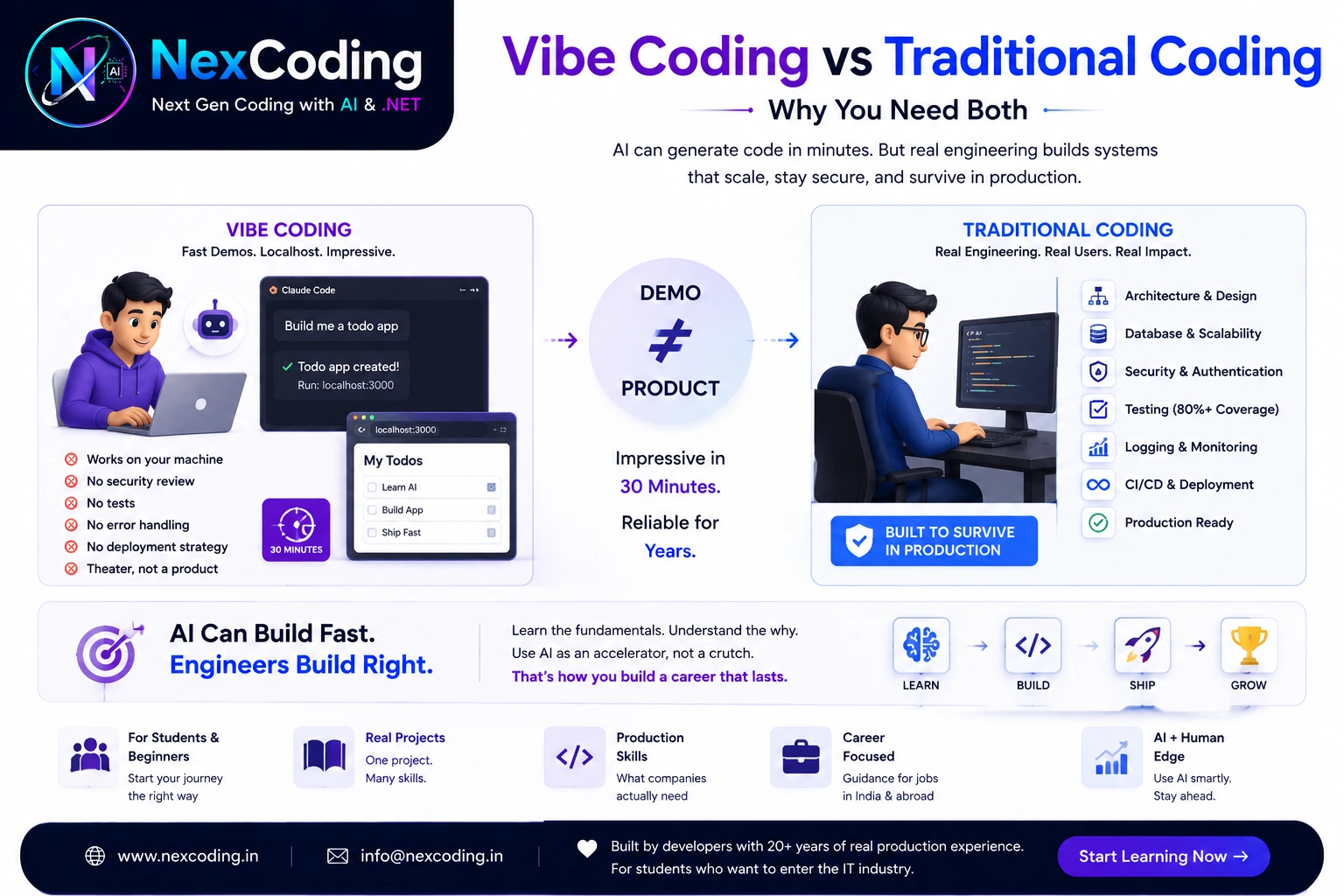
Vibe coding = using AI to generate working code without understanding it.

The workflow looks like this:

  1. โœ… Ask Claude Code: "Build me a todo app"
  2. โœ… Click run โ†’ localhost:3000
  3. โœ… It works on your machine
  4. โœ… Screenshot. Post online: "No experience needed, built in 5 minutes"

What actually happened:

  • โœ… AI generated syntactically valid code
  • โœ… Components connected to a database
  • โœ… Frontend renders something functional
  • โœ… Works. Today. On your machine.

What didn't happen:

  • โŒ Security review
  • โŒ Error handling for real users
  • โŒ Database constraints and indexes
  • โŒ Automated tests
  • โŒ Documentation
  • โŒ Deployment strategy
  • โŒ Production monitoring and alerting

Theater, not a product. Impressive locally. Breaks in production.

๐ŸŽฏ What Employers See

You (in interview): "Built a full todo app with authentication in 30 minutes using AI."

Employer (thinking): "Can they debug code they didn't write? Do they understand why the code works? Can they architect a system from scratch?"

What they ask: "Walk me through your architecture. Why did you choose that database structure? How would you handle 10,000 concurrent users?"

You're silent. You don't know.